
Some Naive holistic doctors say: “If you take cholesterol drug, take CoQ10 with it for muscle aches.”
I say this to those I call ‘naive holistic doctors’: Who told you that statins only cause muscle aches?
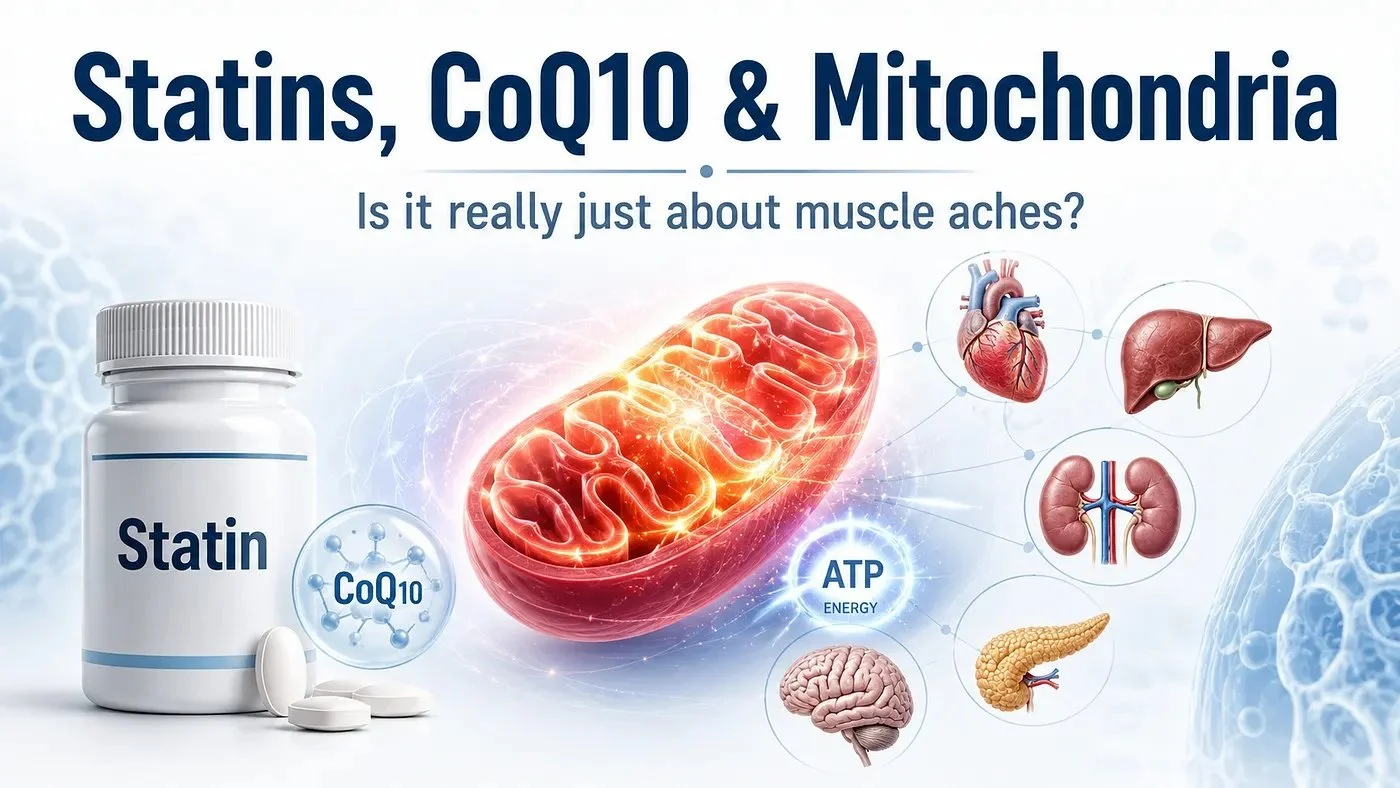
Statins interfere with your cell performance, specifically your mitochondria’s ATP performance to produce cellular energy. And we are not talking about muscle cells only. We are talking about mitochondria throughout your entire body, including organs such as the heart, liver, kidneys, brain, and pancreas.
And the statin drug companies already know about it.
Who Told You Statins Only Cause Muscle Aches?
Muscle pain is only one part of the story.
Statins interfere with the mevalonate pathway, the same biochemical pathway involved in the production of CoQ10. And CoQ10 is not something your muscles alone need. It is deeply involved in mitochondrial energy production throughout the body.
Your heart has mitochondria.
Your liver has mitochondria.
Your kidneys have mitochondria.
Your brain has mitochondria.
Your pancreas has mitochondria.
So why does the conversation suddenly stop at muscle pain?
Even the drug labels themselves go much further than aching muscles. Depending on the statin, the prescribing information reports problems in the package inserts such as myopathy, rhabdomyolysis, liver dysfunction, increased blood glucose, and pancreatitis. Atorvastatin labeling, for example, lists pancreatitis among reported adverse reactions. Rosuvastatin labeling has also reported pancreatitis in clinical studies.
So when a doctor says, “Statins can make your muscles hurt, so maybe take CoQ10,” my question is much bigger:
If statins can lower CoQ10 and interfere with a pathway connected to mitochondrial function, why are we pretending that skeletal muscle is the only tissue worth discussing?
Statins Don’t Just Block Cholesterol
Here is the part that is rarely explained clearly.
Your body uses something called the mevalonate pathway.
Think of it like a production line inside the body.
One of the things produced through this pathway is cholesterol.
But cholesterol is not the only thing that comes from that production line.
CoQ10 is connected to the same pathway.
Statins work by blocking an important enzyme near the beginning of this pathway. That is how they reduce cholesterol production.
But when you interfere with the pathway upstream, you can also reduce other things produced downstream, including CoQ10.
This connection has been documented for years.
Research note: A 2015 meta-analysis of randomized controlled trials found that statin treatment significantly reduced circulating CoQ10 concentrations. A second meta-analysis published in 2018 reached the same overall conclusion. [1,2]
And this is where my problem with the usual explanation begins.
Doctors often talk about CoQ10 only when a statin user develops muscle pain.
Why?
CoQ10 is not sitting inside your muscles waiting to prevent an ache.
It is part of the machinery your mitochondria use to produce ATP, the energy your cells actually run on.
Research note: Reviews of statin effects on mitochondria describe reduced CoQ10 as one of several proposed mitochondrial effects, alongside changes in respiratory-chain activity and cellular energy metabolism. [3]
Your muscle cells need ATP.
But so do your heart cells.
Your liver cells.
Your kidney cells.
Your brain cells.
Your pancreatic cells.
Every one of those tissues depends heavily on cellular energy.
So if statins can lower CoQ10, why is the conversation so often reduced to:
Your muscles hurt? Take some CoQ10.
That explanation is far too small for what is actually happening biologically.
The muscle ache may simply be the symptom people notice first. The underlying biochemical change is not automatically confined to the muscle that happens to hurt.
Your Organs Have Mitochondria Too
This is the part I think people need to stop and think about.
Your muscles are not the only tissues in your body that need energy.
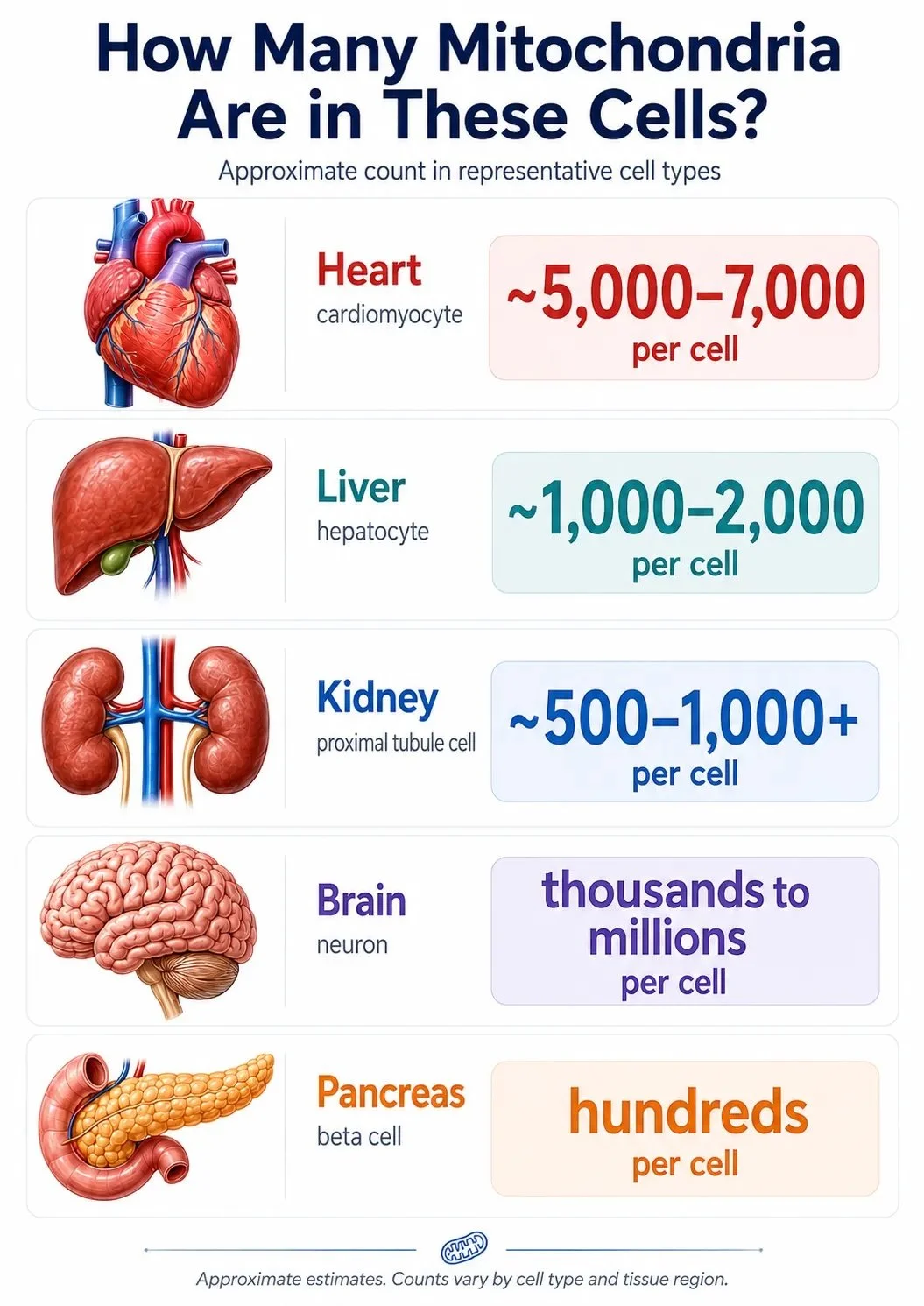
Your heart works every second of your life. It needs a constant supply of ATP to contract and keep blood moving.
Your brain also consumes an enormous amount of energy. Your neurons need energy to communicate, maintain their electrical balance, and continue functioning.
Your kidneys need energy constantly to filter blood and move substances in and out of the bloodstream.
Your liver performs hundreds of metabolic jobs every day, and all of that requires cellular energy.
And your pancreas contains cells that also depend on mitochondrial function to perform their jobs properly.
So again, why are we talking as if mitochondria suddenly become important only when somebody develops pain in their legs?
If CoQ10 matters because it participates in mitochondrial ATP production, then the discussion should logically include every tissue that depends heavily on mitochondria.
That does not mean every person taking a statin will suddenly develop heart, kidney, liver, brain, or pancreatic problems.
That is not what I am saying.
Join Medium for free to get updates from this writer.
Remember me for faster sign in
What I am saying is that the biological conversation is much bigger than muscle soreness.
And if you are going to explain why statins can reduce CoQ10, then explain the whole thing.
Don’t stop halfway.
Even the Drug Labels Tell a Bigger Story
This is another reason I don’t understand why the conversation is constantly reduced to muscles.
Read the prescribing information.
The warnings and reported adverse reactions are not limited to:
Your muscles might hurt.
You will find discussions of myopathy and rhabdomyolysis, of course.
But you also see warnings or reported problems involving liver enzymes and liver function.
You see increased blood glucose.
You see concerns about new-onset diabetes.
You see kidney complications associated with severe rhabdomyolysis.
And with some statins, pancreatitis has appeared among reported adverse reactions.
Research note: Current U.S. prescribing information for atorvastatin warns about myopathy and rhabdomyolysis, including acute kidney injury secondary to myoglobinuria. Atorvastatin labeling also includes pancreatitis among postmarketing adverse reactions. CRESTOR (rosuvastatin) labeling reports pancreatitis among adverse reactions observed in clinical studies and notes increases in glucose. [4,5]
So clearly, even the official drug information itself describes a much wider picture.
This does not prove that every one of these problems is caused by CoQ10 depletion.
That is an important distinction.
But it does destroy the idea that the statin conversation begins and ends with sore muscles.
The drug itself is affecting a major metabolic pathway.
CoQ10 is connected to that pathway.
Mitochondria throughout the body depend on CoQ10 for energy production.
And the prescribing information itself discusses effects involving more than skeletal muscle.
Put those pieces together and at least ask the bigger question.
So Why Are We Treating CoQ10 Like a Muscle Supplement?
This is what bothers me the most.
If you tell somebody:
Statins can lower CoQ10, so take CoQ10 if your muscles hurt
you are making CoQ10 sound like some kind of muscle-pain supplement.
It isn’t.
CoQ10 is involved in the mitochondrial electron transport chain, the machinery responsible for producing ATP inside your cells.
That is a cellular-energy issue.
Not a biceps issue.
Not a calf-muscle issue.
Not a thigh-muscle issue.
A cellular-energy issue.
So maybe the better question is not:
Do my muscles hurt from my statin?
Maybe the better question is:
What happens throughout the body when a drug interferes with a pathway connected to something my mitochondria use to make energy?
That is a completely different conversation.
And it is a much more important one.
Am I telling you to stop your statin drug?
Of course not.
You need to speak with your healthcare provider, and I am not a certified medical doctor.
What I’m telling you here in this article is simply to understand the full picture of statin drug side effects and to understand that the problem is not just muscle aches.
It goes much deeper than that.
So the next time someone tells you:
Take CoQ10 with your statin for the muscle aches
ask one more question:
Why are we talking only about the muscles when every organ in my body is made of cells that need mitochondrial energy too? You need to open up your mind!
Disclaimer
This article is for general educational purposes only and is not medical advice. I am not a certified medical doctor. Always speak with your healthcare provider before starting, stopping, or changing any medication or supplement.
Studies and References
1. Banach M, et al. Statin therapy and plasma coenzyme Q10 concentrations: a systematic review and meta-analysis of placebo-controlled trials. Pharmacological Research. 2015;99:329–336.
2. Qu H, et al. The effect of statin treatment on circulating coenzyme Q10 concentrations: an updated meta-analysis of randomized controlled trials. European Journal of Medical Research. 2018;23:57.
3. Mollazadeh H, et al. Effects of statins on mitochondrial pathways. Journal of Cachexia, Sarcopenia and Muscle. 2021;12(2):237–251.
4. DailyMed. Atorvastatin Calcium Tablets, U.S. prescribing information. National Library of Medicine. Accessed August 2026.
5. DailyMed. CRESTOR (rosuvastatin calcium), U.S. prescribing information. National Library of Medicine. Accessed August 2026.