
Everyone Talks About Omega-3. But What About Omega-7?
The Overlooked Omega 7 That Made My Skin Feel Softer and Better Hydrated
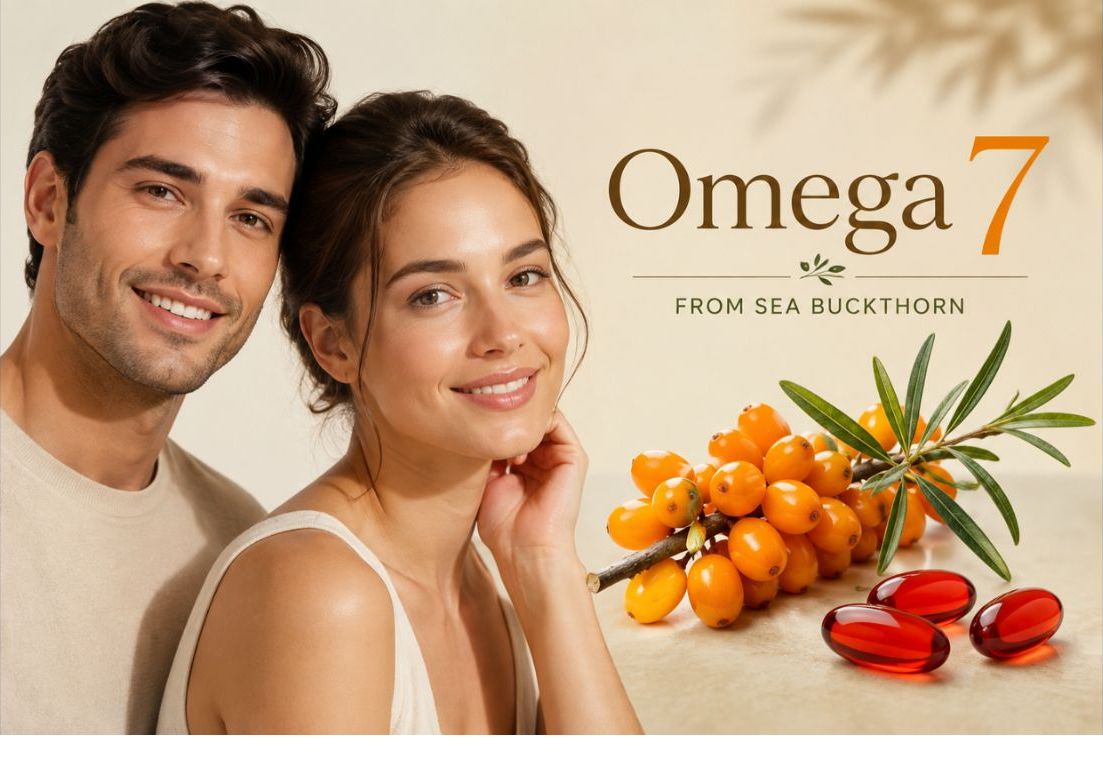
Everyone interested in skin seems to know about collagen.
They know about hyaluronic acid, vitamin C, ceramides and omega-3. Some people have shelves filled with creams, serums and powders promising smoother, brighter and younger-looking skin.
But there is another fatty acid that receives surprisingly little attention.
Omega-7.
I did not begin taking omega-7 because I expected a dramatic change in my appearance. I was interested in what it might do inside the body. Then, after taking it consistently for about two months, I began noticing something I had not expected.
My skin felt softer and more hydrated.
It seemed better hydrated and more supple. It did not feel as though a cream was temporarily sitting on top of it. The difference felt more internal, as though my skin was retaining moisture better.
I am a man, and I was not carefully examining my face under special lighting every morning. That may be precisely why the change caught my attention.
Why did my skin suddenly feel softer when I had no skincare routine ?
That question made me look more closely at omega-7.
What I discovered was a fatty acid found in an unusual orange berry, supported by some interesting human research, yet still largely absent from everyday conversations about skin.
First, What Exactly Is Omega-7?
Omega-7 is the name given to a family of monounsaturated fatty acids. The form most frequently discussed in supplements is palmitoleic acid.
Unlike omega-3 and omega-6, omega-7 is not considered essential because the body can make palmitoleic acid on its own.
But that does not mean the body always makes the amount we are looking for. Omega-7 is also not found in large amounts in most everyday foods, which is why taking it as a supplement can provide a more direct and consistent amount.
Small amounts of omega-7 occur naturally in foods such as macadamia nuts, dairy fat, certain fish and avocado. One of its richest plant sources is sea buckthorn.
Not sea buckwheat.
Sea buckthorn, scientifically known as Hippophae rhamnoides, is a thorny shrub that produces small, bright orange berries. It grows across parts of Europe and Asia, including Himalayan regions.
That may explain why some supplement companies place the word “Himalayan” prominently on their packaging. But geography alone does not tell us whether the product contains a useful amount of omega-7.
The more important question is:
Which part of the berry did this oil come from?
Sea buckthorn produces oils with very different fatty-acid profiles.
Research fact: Sea buckthorn fruit or pulp oil is particularly rich in palmitoleic acid, while sea buckthorn seed oil generally contains much less omega-7 and is richer in omega-3 and omega-6 fatty acids.
This distinction matters.
A bottle can display a beautiful picture of orange sea buckthorn berries while telling you very little about how much omega-7 is actually inside.
For someone specifically interested in omega-7, fruit oil, pulp oil, berry oil or a clearly standardized fruit-and-seed blend is more relevant than an unidentified sea buckthorn oil.
What I Noticed in My Own Skin
I took approximately four weeks of sea buckthorn oil every day.
After approximately two weeks, I noticed that my skin felt softer and better hydrated. It also appeared less dull to me.
The change was gradual enough that I did not immediately connect it to the supplement.
This was not an overnight cosmetic transformation.
My face did not suddenly look twenty years younger. My fine lines did not disappear. Omega-7 did not replace sleep, hydration or sensible nutrition.
But something had changed.
My skin did not merely look as though I had applied a moisturiser. It felt softer from within.
That is my personal experience. It is not scientific proof that every man or woman will experience the same result.
But personal experience should not be dismissed merely because it happened to one person. Sometimes an unexpected observation is what leads us to ask a better scientific question.
In my case, the question became:
Can an oil taken by mouth really influence how hydrated and supple the skin feels?
The honest answer is that it might, but the human research is still limited.
What Has Actually Been Studied?
Sea buckthorn oil contains more than omega-7.
Depending on whether it comes from the fruit, pulp, seed or a combination, it may also contain omega-3, omega-6, omega-9, carotenoids, tocopherols and plant sterols.
This creates an important problem when interpreting the research.
When researchers give people sea buckthorn oil, they are studying the complete oil. They are not necessarily studying isolated palmitoleic acid.
We therefore cannot claim that every reported benefit came exclusively from omega-7.
Research fact: Sea buckthorn fruit oil and seed oil have substantially different fatty-acid compositions. Fruit oil is particularly rich in palmitoleic acid, while seed oil contains a larger proportion of polyunsaturated fatty acids.
A recent randomized trial examined oral sea buckthorn oil in women over a period of 12 weeks.
Research finding: The trial reported improvements in several measured skin parameters, including hydration, elasticity, brightness, texture and collagen-density measurements. The study was small, so the findings should be treated as promising rather than final proof.
This is encouraging, but it is not enough to describe omega-7 as a proven transformation for the skin.
Small trials can identify a promising effect. They cannot tell us whether everyone will respond, how visible the difference will be or whether omega-7 alone caused the result.
My experience makes me interested in omega-7. The research gives me a reason to take that interest seriously.
That is very different from calling it a miracle.
Softness, Hydration and What People Call “Glow”
The word glow appears everywhere in beauty marketing.
But what does glowing skin actually mean?
Usually, people are noticing a combination of changes.
The skin looks less dry.
Its surface appears smoother.
It reflects light more evenly.
Its colour looks less dull.
It feels softer and more supple.
Omega-7 is not literally producing light under the skin.
A more believable possibility is that better-hydrated, smoother skin may appear brighter because its surface is less rough and dry.
That is why I prefer to describe my own experience specifically.
My skin felt softer.
It felt more supple.
It appeared better hydrated and less dull.
Those descriptions are more meaningful than simply saying that omega-7 gave me perfect glowing skin.
The Benefit Women May Find Especially Interesting
The skin is not the only part of the body that depends on healthy surface tissues and moisture.
The body also has mucous membranes lining areas such as the eyes, mouth, digestive tract and vagina.
Vaginal dryness is especially common during and after menopause as hormonal changes affect the vaginal tissue. It can lead to dryness, irritation, burning, discomfort and pain during intimacy.
This is not a subject women should feel embarrassed to discuss. It is a normal health issue.
Sea buckthorn oil has been studied in this area.
Research finding: In a randomized, double-blind, placebo-controlled trial, 116 postmenopausal women with vaginal dryness, itching or burning received either three grams of sea buckthorn oil or placebo daily for three months. The sea buckthorn group showed significantly greater improvement in vaginal epithelial integrity, meaning the surface tissue appeared healthier.
But this study needs to be described accurately.
It did not show that every measure of vaginal moisture improved significantly. It also did not prove that sea buckthorn oil increases fertility or helps women become pregnant.
Research limitation: Although vaginal epithelial integrity improved, the trial did not demonstrate a significant advantage over placebo for every individual measure, including all direct measurements of vaginal moisture and elasticity. The participants were postmenopausal women, not women trying to conceive.
Some women on TikTok say they feel less dry or more comfortable after taking omega-7. Those experiences may be genuine, but social-media testimonies cannot reveal how many women experienced no change.
The careful way to describe the evidence is this:
Get MitoWise’s stories in your inbox
Join Medium for free to get updates from this writer.
Sea buckthorn oil may support the health and integrity of vaginal tissue. Some women may also experience improved comfort, but increased moisture should not be promised as a guaranteed result.
Women deserve to hear about this possible benefit without exaggeration, embarrassment or unnecessary sexual language.
That is all this part of the article needs to say.
Can Food Give You Omega-7?
Yes, food can provide omega-7.
Macadamia nuts and macadamia oil are among its better-known dietary sources. It can also be found in varying quantities in sea buckthorn berries, some fish, dairy fat and certain other foods.
However, there is currently no established recommended daily allowance for omega-7.
This means we cannot truthfully claim that everyone is deficient or that food is scientifically proven to be inadequate.
The real difference is predictability.
The amount of omega-7 in food varies. Most people also do not calculate precisely how much palmitoleic acid they consume each day.
A standardized supplement can make the amount easier to identify, provided the manufacturer actually states its omega-7 content.
Food may provide omega-7, but supplementation offers a more measurable way of reaching the quantities used in clinical studies.
How Much Should You Take?
There is currently no universally accepted official daily dose for omega-7.
Different studies have used different sea buckthorn oils, concentrations and total daily amounts. This makes it impossible to identify one perfect number for everyone.
Research fact: The clinical trial involving postmenopausal vaginal health used three grams of sea buckthorn oil daily for three months.
A separate skin trial used a lower total quantity.
Research fact: The skin trial used 1,000 mg of a combined sea buckthorn fruit-and-seed oil preparation daily for 12 weeks.
Based on the amounts used in human studies, 1,000 to 3,000 mg of sea buckthorn oil per day is a research-based range that can be discussed.
The actual omega-7 content depends on the oil.
For example, 1,000 mg of fruit oil containing 30% palmitoleic acid would provide approximately 300 mg of omega-7. A seed oil may provide much less even when the total amount of oil is identical.
This is why a large number on the front of the bottle can mislead buyers.
1,000 mg of sea buckthorn oil does not mean 1,000 mg of omega-7.
The question is not only how much oil is in the capsule. The real question is how much omega-7 that oil actually provides.
How to Avoid Buying the Wrong Supplement
This is probably the most useful part for anyone thinking about purchasing omega-7.
Look for the correct plant
The label should identify sea buckthorn by its scientific name:
Hippophae rhamnoides
“Himalayan” may describe where the plant was grown, but the word itself does not guarantee purity, potency or higher omega-7 content.
Look for fruit or pulp oil
For a higher natural concentration of omega-7, look for:
Sea buckthorn fruit oil
Sea buckthorn pulp oil
Sea buckthorn berry oil
A standardized fruit-and-seed oil blend
Research fact: Fruit oil contains a much higher proportion of palmitoleic acid than seed oil. Seed oil has a different fatty-acid profile and is generally richer in omega-3 and omega-6.
Look for declared omega-7 content
The strongest labels state how much palmitoleic acid or omega-7 the daily serving contains.
A vague label that only says “sea buckthorn complex” gives the buyer very little useful information.
Check the complete daily serving
Look closely at whether the advertised quantity is per capsule or per several capsules.
A bottle may advertise 1,000 mg prominently, while the smaller print reveals that reaching that amount requires four capsules.
Check for unnecessary added oils
Some supplements mix sea buckthorn with cheaper carrier oils.
That does not automatically make the product bad, but it may reduce the amount of actual sea buckthorn oil unless the formulation is clearly explained.
Consider oxidation and storage
Sea buckthorn oil contains delicate fatty acids and plant compounds.
Exposure to heat, light and oxygen may gradually damage the oil. Dark packaging, sensible storage instructions and credible quality testing matter more than attractive claims about exotic mountains.
How Long Does It Take?
Some people claim they notice changes quickly.
Others report needing one month, two months or even three to four months.
Some people may take it consistently and notice nothing at all.
Skin changes are difficult to judge because hydration, weather, sleep, diet, stress and skincare can all change at the same time.
I would not judge omega-7 after only a few days.
Research fact: Human trials studying skin and vaginal tissue have generally lasted several weeks or approximately three months, not only a few days.
A more realistic approach is to take it consistently and pay attention to specific changes.
Does the skin feel softer?
Does it feel less dry?
Does it appear less dull?
Does the improvement remain even when no cream has just been applied?
Omega-7 did not announce itself. I noticed it gradually through the way my skin began to feel.
Consistency matters because the changes people are looking for are not usually immediate cosmetic effects.
What I Would Tell Anyone Considering Omega-7
Omega-7 remains overlooked partly because it does not have the fame of omega-3 or the enormous beauty industry behind collagen.
But it is not imaginary.
Sea buckthorn fruit oil is an unusually rich plant source of palmitoleic acid. Early human research gives us reasons to investigate its possible effects on skin and moisture-sensitive tissues.
My own experience was simple.
My skin felt softer, more supple and better hydrated after I took it consistently.
That does not mean every woman or man will experience the same thing. It does mean omega-7 deserves more attention than it currently receives.
Before buying it, look beyond the orange berries and the word “Himalayan.”
Ask what part of the berry was used.
Ask how much omega-7 the supplement actually provides.
Ask whether the number on the front of the bottle represents one capsule or the complete daily serving.
And give it time.
Omega-7 may be unfamiliar, but sometimes the supplement nobody is discussing is the one that makes you ask the most interesting questions.
Resources and Studies
The main scientific sources used to check the composition of sea buckthorn oil, the amounts used in human trials and the limits of the evidence are listed below.
Chan, L.-P., Yen, T.-W., Tseng, Y.-P., Yuen, T., Yuen, M., Yuen, H. and Liang, C.-H. (2024). The impact of oral sea-buckthorn oil on skin, blood markers, ocular, and vaginal health: A randomized control trial. Journal of Functional Foods, 112, 105973. https://doi.org/10.1016/j.jff.2023.105973
Why it matters: Randomized controlled trial; 40 women aged 45 or older; 12 weeks. It examined skin measurements and self-reported ocular and vaginal outcomes. The trial was small and involved a branded sea buckthorn oil ingredient.
Larmo, P.S., Yang, B., Hyssälä, J., Kallio, H.P. and Erkkola, R. (2014). Effects of sea buckthorn oil intake on vaginal atrophy in postmenopausal women: A randomized, double-blind, placebo-controlled study. Maturitas, 79(3), 316–321. https://doi.org/10.1016/j.maturitas.2014.07.010
Why it matters: Randomized, double-blind, placebo-controlled trial; 116 postmenopausal women were randomized and 98 completed the study; 3 g daily for three months. Vaginal epithelial integrity improved, but not every moisture or elasticity measure was significantly better than placebo.
Solà Marsiñach, M. and Cuenca, A.P. (2019). The impact of sea buckthorn oil fatty acids on human health. Lipids in Health and Disease, 18, 145. https://doi.org/10.1186/s12944-019-1065-9
Why it matters: Peer-reviewed review of sea buckthorn fatty acids and their potential relevance to human health. Useful for explaining how fruit and seed oils differ and why findings from complete sea buckthorn oil cannot automatically be attributed to omega-7 alone.
Zielińska, A. and Nowak, I. (2017). Abundance of active ingredients in sea-buckthorn oil. Lipids in Health and Disease, 16, 95. https://doi.org/10.1186/s12944-017-0469-7
Why it matters: Peer-reviewed composition review. It describes the fatty-acid, carotenoid, tocopherol and plant-sterol profiles of sea buckthorn oils, including the higher palmitoleic-acid content of pulp oil compared with seed oil.