
Ditch Creatine After 40: Combine Urolithin A and B Instead
Creatine improves training performance. Urolithin A and Urolithin B address the deeper problem of ageing muscle.
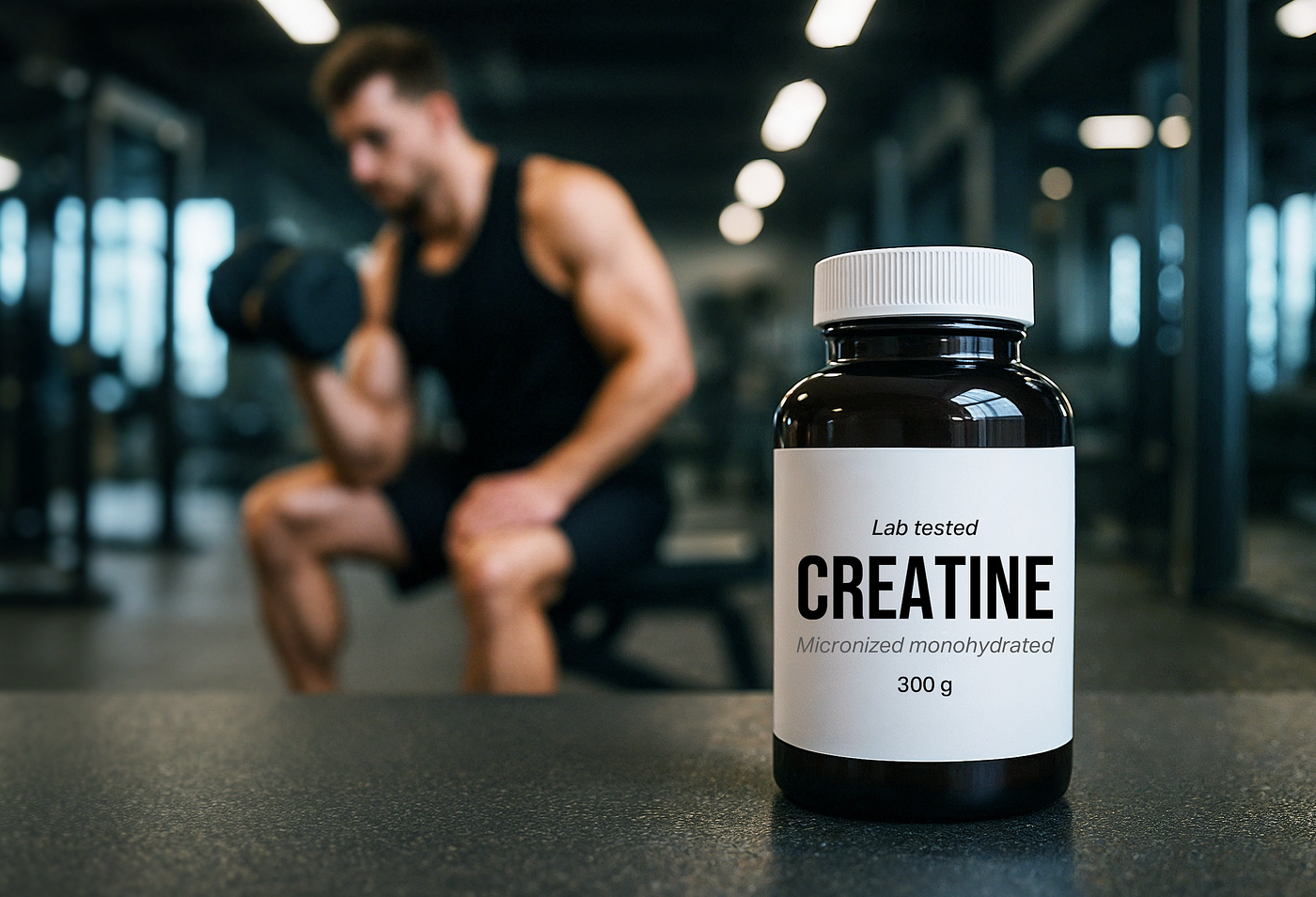
Image licensed by Shutterstock
I kept hearing the same recommendation.
If you are over 40 and worried about losing muscle, take creatine.
If you care about longevity, take creatine.
If you want to remain strong as you age, take creatine.
The advice has become so automatic that hardly anyone stops to ask the most important question:
What are we actually trying to achieve?
Are we trying to perform another repetition in the gym?
Are we trying to make our muscles temporarily look and feel fuller?
Or are we trying to preserve functional, biologically healthy muscle for the next thirty or forty years?
Those are not the same goal.
Creatine can be useful. I understand why athletes take it, and I am not denying the large body of research behind it.
But I no longer believe creatine deserves to sit at the centre of the muscle-longevity conversation.
After examining what happens to muscle as we age, what creatine actually does, and what researchers have discovered about Urolithin A and Urolithin B, I reached a different conclusion.
Creatine helps muscles perform. Urolithin A and Urolithin B address what ageing is doing to the muscle itself.
That is why I believe they belong together.
The Problem Is Bigger Than Losing Muscle Size
Most people understand that muscle mass declines with age.
But the deeper problem is not simply that our arms and legs become smaller.
Ageing muscle also loses strength, power, mitochondrial efficiency and overall quality.
A major three-year study followed 1,880 older adults and found that leg strength declined approximately three times faster than leg lean mass. Some participants even maintained or gained lean mass without maintaining their strength. The researchers concluded that preserving muscle mass alone did not prevent the age-related decline in muscular strength.
That finding should completely change how we think about muscle longevity.
A muscle can remain relatively large while becoming weaker.
A body-composition scan can show lean mass while the quality and function of that tissue continue to deteriorate.
Keeping muscle is not only about keeping its size. It is about keeping the muscle capable, energetic and resistant to decline.
This is why I started questioning whether creatine was answering the right question.
What Creatine Actually Does
Creatine helps replenish phosphocreatine, which allows muscle cells to regenerate ATP rapidly during short, intense muscular efforts.
That makes creatine particularly useful for activities such as weightlifting, sprinting and repeated high-intensity exercise.
It may help someone complete more repetitions, maintain power during a workout and accumulate more productive training volume.
When creatine is combined with resistance training in older adults, research shows improvements in strength and lean tissue compared with resistance training alone.
That is a legitimate benefit.
But look carefully at what creatine is doing.
It is supporting the energy system used during intense muscular performance. It can allow a person to train more effectively, and that additional training can contribute to greater strength and muscle growth.
This makes creatine an excellent performance amplifier.
It does not make it a complete muscle-longevity strategy.
A 2023 meta-analysis examining direct measurements of muscle size found that creatine combined with resistance training produced only a small additional hypertrophy effect beyond resistance training alone.
That distinction matters.
Creatine may help you get more from your workout.
But the workout remains the main signal telling your body to preserve and build muscle.
The Muscle-Fullness Effect
Creatine is famous for increasing body weight and measured lean mass.
Part of that increase can come from water.
A controlled study found that creatine loading increased body mass, muscle creatine concentration and total body water.
A more recent randomised trial gave participants 5 grams of creatine daily. After a seven-day introductory period, the creatine group had gained approximately half a kilogram more measured lean body mass than the control group before the resistance-training programme had properly begun. After twelve weeks of training, creatine did not produce greater lean-mass growth than training alone.
This does not mean that every kilogram gained while using creatine is water.
It means that lean mass and newly constructed muscle tissue are not always the same thing.
Water is classified as lean mass.
A muscle filled with more water can feel larger, look fuller and produce a higher lean-mass reading.
But a fuller muscle is not automatically a younger muscle.
And when creatine supplementation stops, some of that additional water and fullness can disappear.
That is not a criticism of creatine. It is a correction of how people interpret its effects.
Muscle fullness should not be confused with protection from muscle ageing.
Creatine Is Strongest When You Train
The most convincing muscle evidence for creatine repeatedly appears when it is combined with resistance training.
Meta-analyses in older adults show that creatine can improve strength and lean tissue gains when added to a structured training programme.
Again, that is useful.
But it also reveals creatine’s proper position.
Creatine helps you train.
Resistance training creates the biological demand for your body to maintain muscle.
Creatine should therefore be seen as an assistant to exercise, not as an independent answer to every process driving muscular decline.
There has been some research suggesting that creatine without exercise could help certain older populations, but that case is far less established than the combination of creatine and resistance training.
So I asked a different question:
What compounds might address the ageing muscle even before we discuss how much weight it can lift?
That question led me to Urolithin A.
Urolithin A Targets the Muscle’s Power System
Muscle requires an enormous amount of energy.
That energy is produced by mitochondria, the structures inside cells that convert nutrients into usable cellular energy.
But mitochondria do not remain healthy forever.
They become damaged.
They become less efficient.
And if the cell fails to remove dysfunctional mitochondria effectively, they accumulate.
Urolithin A became interesting to me because it is not simply another fuel source. It targets mitophagy, the cellular process responsible for identifying, removing and recycling damaged mitochondria.
In a first-in-human study involving sedentary older adults, oral Urolithin A was absorbed and produced molecular changes associated with improved mitochondrial and cellular health.
Then came the more important question.
Would these mitochondrial changes affect actual muscle performance?
A randomised clinical trial studied adults aged 65 to 90 who received 1,000 milligrams of Urolithin A daily for four months.
After two months, participants taking Urolithin A improved endurance in hand and leg muscles, measured by how many repeated contractions they could complete before fatigue. The researchers also observed changes in blood biomarkers associated with mitochondrial health.
Another randomised trial examined 88 untrained, overweight, middle-aged adults.
Participants received either 500 milligrams, 1,000 milligrams or a placebo for four months. They were not given an additional exercise programme.
Urolithin A significantly improved hamstring strength at both doses. The study reported an improvement of approximately 12 percent in muscle strength and found changes in skeletal-muscle proteins connected to mitochondrial metabolism and mitophagy.
That difference is critical.
Creatine helps supply rapid energy during muscular effort.
Urolithin A targets the quality-control system responsible for the machinery producing that energy.
Creatine helps the muscle spend energy.
Urolithin A addresses the condition of the engines producing it.
But mitochondrial quality is still only one side of the ageing-muscle problem.
The other side is the balance between muscle construction and muscle destruction.
That is where Urolithin B enters the picture.
Urolithin B Is the Molecule Biohackers Are Ignoring
Urolithin A has received most of the attention.
Urolithin B has not.
That is surprising because the research on Urolithin B goes directly into the biology of muscle growth and muscle loss.
In a study using skeletal-muscle cells and mice, Urolithin B increased muscle-protein synthesis through the mTORC1 pathway.
At the same time, it reduced protein degradation through the ubiquitin-proteasome system, one of the major systems cells use to dismantle proteins.
The researchers also found that Urolithin B increased muscle size in mice and reduced muscle atrophy following sciatic-nerve denervation.
Think about what that means.
Urolithin B was not merely helping the existing muscle contract more powerfully for a few seconds.
It was influencing the balance between building muscular protein and breaking it down.
It was stimulating anabolic signalling.
It was reducing mechanisms involved in muscular degradation.
It was producing muscle hypertrophy.
And it was protecting muscle against a severe experimental model of atrophy.
Creatine helps a muscle perform another repetition. Urolithin B appears to influence whether muscle tissue is being constructed or dismantled.
That is a completely different biological target.
Researchers Studied Them Separately. I Am Putting Them Together.
This is the conclusion I reached from reading the research.
Urolithin A and Urolithin B should not be treated as competing versions of the same molecule.
They appear to address different sides of the same problem.
Urolithin A addresses the power machinery
It promotes mitophagy.
It helps remove damaged mitochondria.
It influences mitochondrial metabolism.
It has improved muscular endurance and strength in human trials.
Urolithin B addresses the muscle structure
It stimulates muscle-protein synthesis.
It activates mTORC1 signalling.
It reduces protein degradation.
It increased muscle growth and resisted experimental atrophy in the published muscle study.
Ageing muscle suffers from both problems.
Its mitochondria become less efficient.
Its ability to build and preserve muscle protein becomes increasingly challenged.
So why would I choose one urolithin and ignore the other?
Urolithin A helps preserve the machinery that powers the muscle. Urolithin B helps defend the tissue that machinery exists to power.
That is why I believe they belong together.
This is not a conclusion handed to me by a supplement company.
It is my conclusion from examining what researchers discovered about each molecule separately and then looking at the complete biology of ageing muscle.
Biohackers combine compounds all the time based on overlapping mechanisms.
But this combination is not random.
One targets mitochondrial quality.
The other targets the balance between muscle construction and destruction.
That is a muscle-longevity strategy.
Creatine Is Not the Villain. It Is the Distraction.
I am not saying creatine has no value.
The research supporting creatine for performance, strength and resistance training is substantial.
But that is exactly where creatine belongs.
Creatine belongs in the performance conversation.
Someone trying to increase gym output, complete more repetitions or maximise resistance-training results has a clear reason to use it.
My argument is about people over 40 who are taking creatine because they believe it is the answer to ageing muscle.
It is not the complete answer.
Creatine does not primarily target mitophagy.
It does not primarily remove damaged mitochondria.
It does not directly solve the declining quality of the muscle’s mitochondrial network.
Its main recognised function is not to suppress the systems dismantling muscle protein.
Its central purpose is rapid energy availability.
That is useful, but it is solving only one narrow part of a much larger problem.
I Would Rather Get My Creatine from Food
Creatine already exists naturally in meat and seafood.
Research measuring creatine in food found that uncooked beef contained approximately 30 millimoles of creatine per kilogram, equivalent to roughly 4 grams per kilogram of raw meat.
That means a large 250-gram raw steak may contain around 1 gram of creatine before cooking losses.
Cooking can reduce the amount of creatine remaining in meat, although creatine consumed from meat is still absorbed by the body.
A steak does not generally provide the same amount of creatine as a typical 3-to-5-gram supplement serving.
I understand that.
But my objective is no longer to saturate my muscles with as much isolated creatine as possible.
I would rather obtain a natural baseline amount from food and place my supplement attention elsewhere.
For me, that means prioritising compounds that address mitochondrial quality, muscle-protein synthesis and muscular degradation.
That means Urolithin A and Urolithin B.
What Is Your Real End Goal?
This is the question everyone over 40 should ask.
Do you want to lift slightly more weight during today’s workout?
Do you want your muscles to hold more water and appear fuller?
Or do you want to protect the machinery, structure and biological quality of your muscles as you become older?
Creatine can help with performance.
Resistance training remains essential.
Protein remains essential.
But creatine should not be mistaken for the entire muscle-longevity strategy.
The ageing muscle does not need only more rapid ATP regeneration.
It needs healthy mitochondria.
It needs effective mitochondrial quality control.
It needs continued protein synthesis.
It needs resistance against excessive protein degradation.
It needs to remain capable of producing energy while preserving its physical structure.
That is the larger objective.
So, my Conclusion is ..
Creatine helps you use the muscle you currently have.
Urolithin A targets the mitochondrial machinery inside that muscle.
Urolithin B targets the balance between constructing muscle and breaking it down.
Researchers investigated these compounds separately.
I am putting the two sides together.
After 40, I am not interested only in temporary fullness, higher body weight or one additional repetition.
I am interested in preserving functional muscle for decades.
I want mitochondria that are efficiently maintained.
I want muscle tissue that continues receiving signals to build rather than disappear.
I want to address the actual biology of ageing muscle, not merely improve the performance of a muscle that may still be deteriorating underneath.
That is why I am looking beyond creatine.
That is why I believe Urolithin A and Urolithin B belong together.
And that is why, for muscle longevity after 40, I would ditch the creatine powder and pay attention to the two urolithins instead.
Source and Studies
1. Goodpaster BH et al. “The Loss of Skeletal Muscle Strength, Mass, and Quality in Older Adults: The Health, Aging and Body Composition Study.” The Journals of Gerontology: Series A, 2006.
2. Chilibeck PD et al. “Effect of Creatine Supplementation During Resistance Training on Lean Tissue Mass and Muscular Strength in Older Adults: A Meta-analysis.” Open Access Journal of Sports Medicine, 2017.
3. Devries MC and Phillips SM. “Creatine Supplementation During Resistance Training in Older Adults: A Meta-analysis.” Medicine & Science in Sports & Exercise, 2014.
4. Burke R et al. “The Effects of Creatine Supplementation Combined With Resistance Training on Regional Measures of Muscle Hypertrophy.” Nutrients, 2023.
5. Powers ME et al. “Creatine Supplementation Increases Total Body Water Without Altering Fluid Distribution.” Journal of Athletic Training, 2003.
6. Desai I et al. “The Effect of Creatine Supplementation on Lean Body Mass With and Without Resistance Training.” Nutrients, 2025.
7. Andreux PA et al. “The Mitophagy Activator Urolithin A Is Safe and Induces a Molecular Signature of Improved Mitochondrial and Cellular Health in Humans.” Nature Metabolism, 2019.
8. Liu S et al. “Effect of Urolithin A Supplementation on Muscle Endurance and Mitochondrial Health in Older Adults.” JAMA Network Open, 2022.
9. Singh A et al. “Urolithin A Improves Muscle Strength, Exercise Performance, and Biomarkers of Mitochondrial Health in a Randomized Trial in Middle-aged Adults.” Cell Reports Medicine, 2022.
10. Rodriguez J et al. “Urolithin B, a Newly Identified Regulator of Skeletal Muscle Mass.” Journal of Cachexia, Sarcopenia and Muscle, 2017.
11. Harris RC et al. “The Concentration of Creatine in Meat, Offal and Commercial Dog Food.” Research in Veterinary Science, 1997.
12. Harris RC et al. “Absorption of Creatine Supplied as a Drink, in Meat or in Solid Form.” Journal of Sports Sciences, 2002.